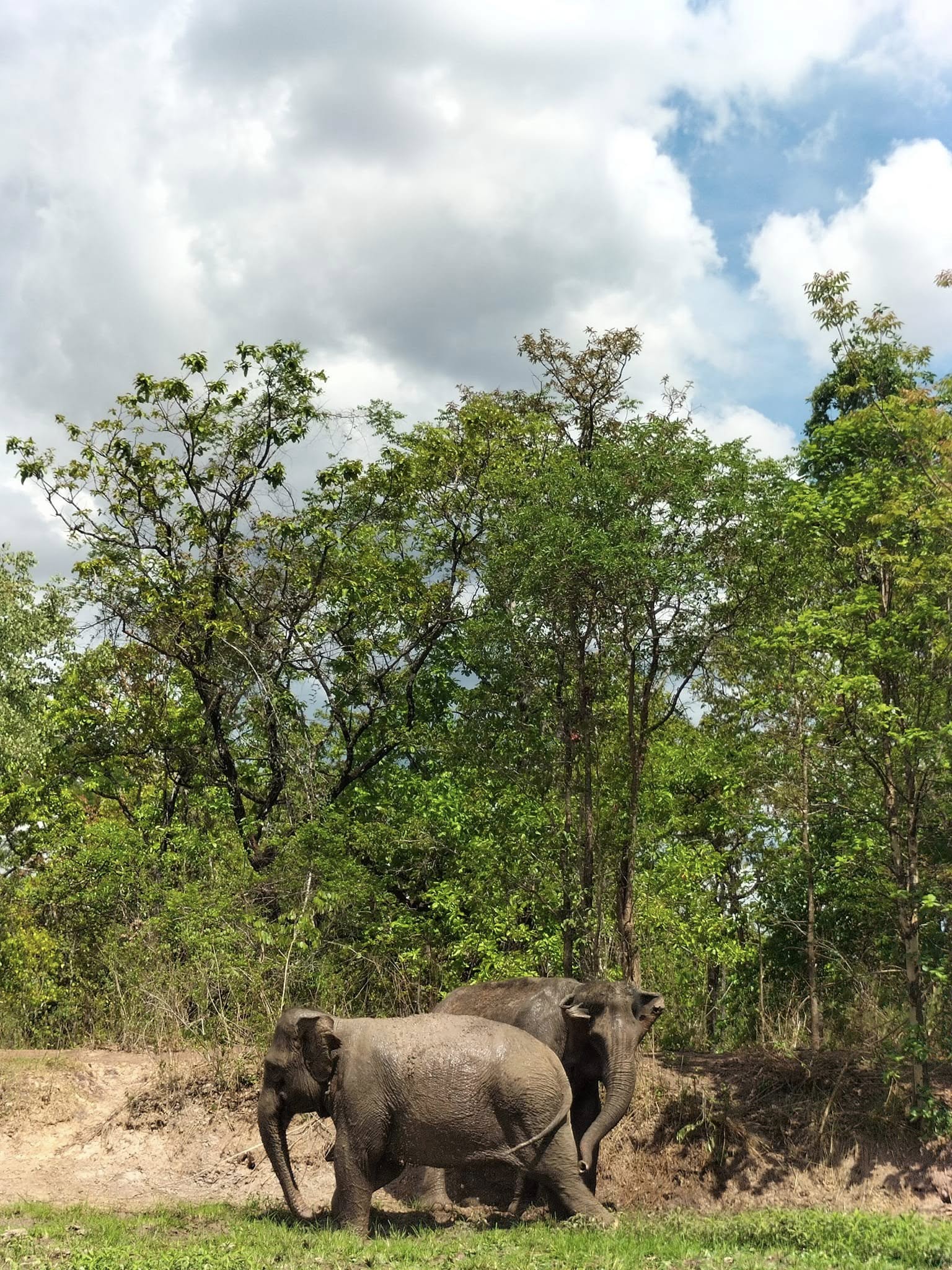
🌿 A Day with Bun Khăm — A 51-Year-Old Elephant at Yok Don National Park
Slow travel, ethical wildlife encounters, and the M'Nông mahout community
Five in the morning. Dew still clings to the dipterocarp canopy along the edge of Yok Don National Park. Mr. Y Mức Bya — a M'Nông mahout — ties his black loincloth, slings a rattan basket over his shoulder, and quietly steps into the forest. You follow behind, still half-asleep, a water bottle in one hand and a small pair of binoculars in the other.
There is no "elephant bath" on today's schedule. No wooden saddle on an elephant's back. No staged moment of your hand pressed against elephant skin for a photograph. Today, you are simply walking out to track the footprints of Bun Khăm — a fifty-one-year-old female elephant who was released into the forest, free and unchained, the night before. You are here to learn how to watch an elephant from a safe distance, exactly the way the ethical elephant conservation model at Yok Don has operated since July 2018.
Tracking an Elephant in the Dipterocarp Forest at Dawn
At Yok Don National Park, one principle has become the backbone of the Ethical Elephant Experience program: by night and by day, elephants are unchained and allowed to roam freely within a designated forest zone. Mahouts do not "herd" their elephants. They follow at a distance, reading footprints, listening for the wooden bell tied around the elephant's neck, checking in each morning — making sure the elephant has not wandered into a villager's field, has not crossed paths with a wild bull in musth, and that no human–elephant conflict has occurred.
Mr. Y Mức Bya teaches you how to read the forest the way one reads an old book. A fresh elephant footprint is still damp with dew; an older one is dry, half-buried under fallen leaves. The wooden bell — a traditional design carved from a hollow block of wood with a striker inside — carries far across the dry April forest. Sometimes you hear the bell first. Sometimes you smell elephant dung first. And sometimes you simply stand still in the middle of the forest for twenty minutes, hearing nothing at all — only the calls of birds and the soft sound of khộp leaves falling.
When he finds Bun Khăm, he does not approach her. He stops about twenty meters away, calls her name once, gently. Bun Khăm turns her head, flaps her ears, and goes back to breaking off a young bamboo branch. He watches her for a few minutes — checking her gait, her eyes, her trunk, her skin — then turns to you and says softly: "She is well today. Nothing to worry about." A mahout's "visit" with his elephant can be that simple.
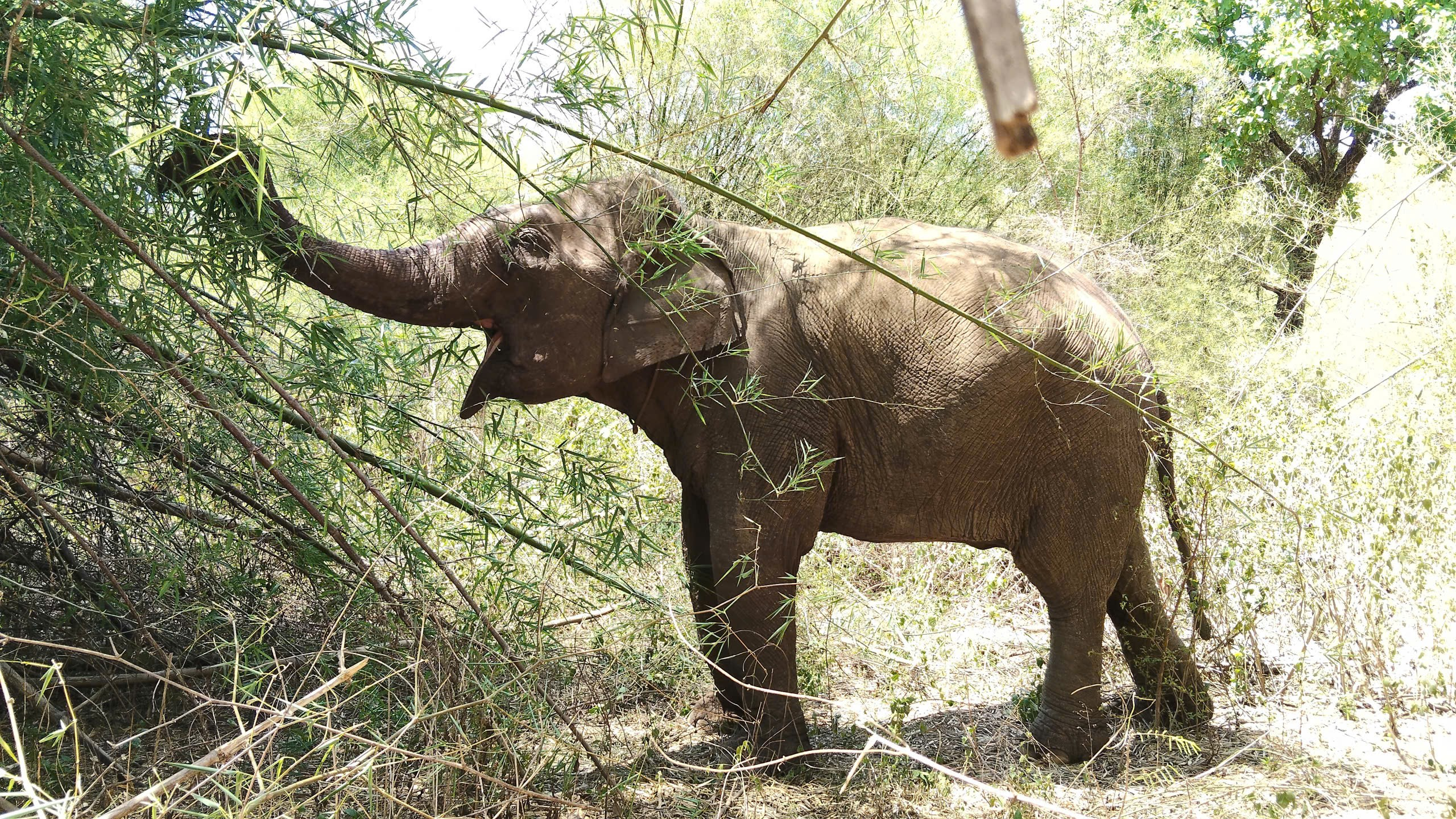
Bun Khăm — 51 Years Old, 6 Owners, and a Final Chapter Lived in Dignity
Bun Khăm's story is nearly as long as a human lifetime. This female elephant was sold to the Yok Don area sometime in the 1990s — back when the area was still a nature reserve, not yet upgraded to a national park. The forest was thick then, with no trails, no paths a human could easily cross. Bun Khăm was an invaluable companion for rangers on patrol westward, near the Vietnam–Cambodia border. On her back she carried rice, water, equipment — the supplies for days-long patrols that no vehicle could ever replace.
When the area was officially gazetted as a national park, her work changed: she began carrying tourists. That was the most physically demanding chapter of her life — and also the period during which many domesticated elephants in the Central Highlands declined the fastest. It was not until July 2018, when Yok Don National Park transitioned to its Ethical Elephant Tourism Model — Vietnam's first systematic ethical elephant program — that Bun Khăm was finally retired from carrying people.
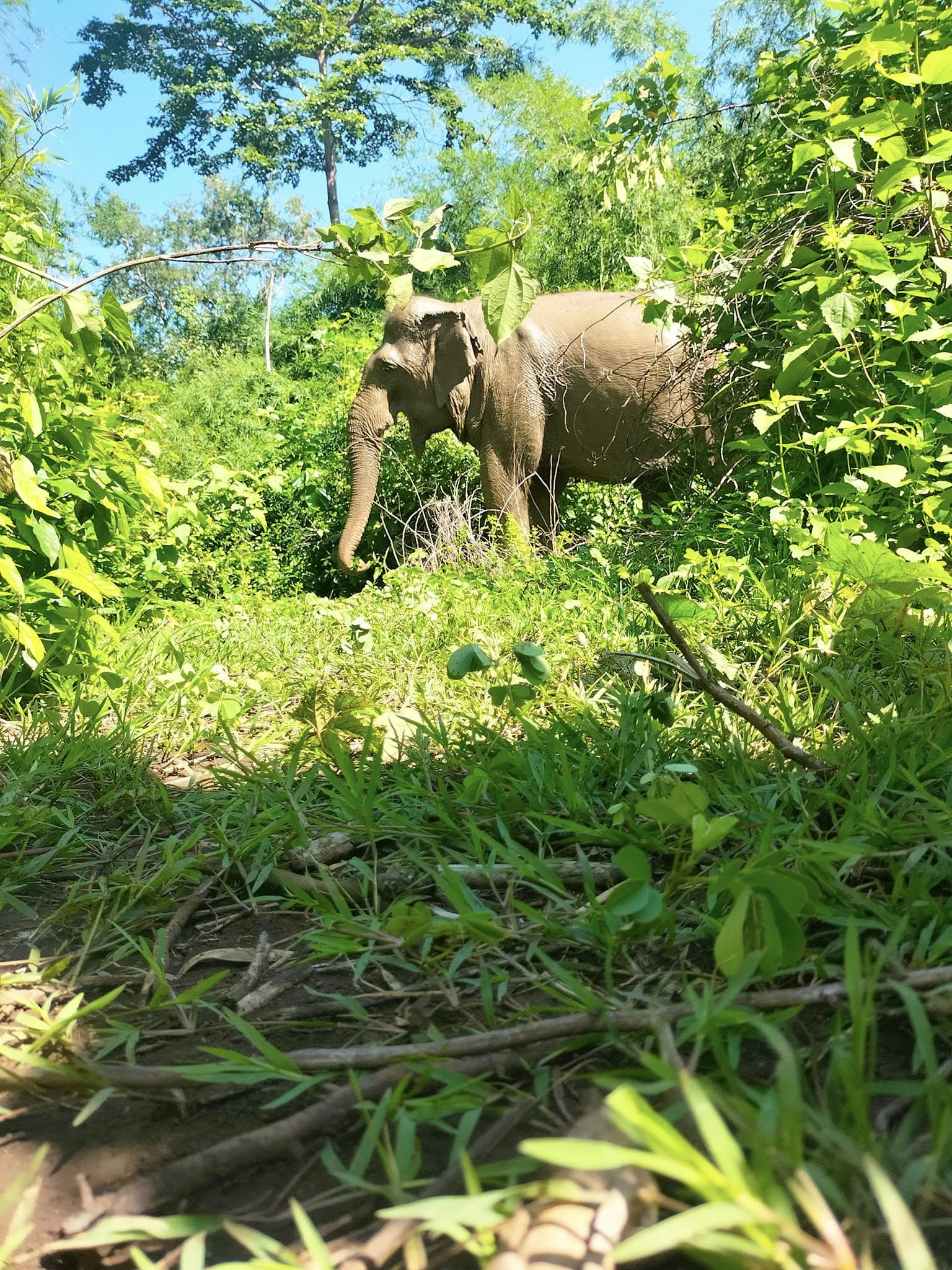
Before the park bought her, Bun Khăm had passed through six different owners. Among the people in the trade, she had a reputation for being "difficult and uncooperative." There were times when she would stand under the shade of a tree and rock her body back and forth, steadily, until every sack of rice on her back had tumbled to the ground. Mahout Y Mưh — the keeper the park later entrusted her to — eventually formed a theory: perhaps that very stubbornness was the reason her previous owners kept passing her on. And perhaps that was the very reason fate placed her in his hands.
It took about three years for Bun Khăm to grow accustomed to her new care. Three years — long enough for an elephant who had survived six owners to begin to believe that, this time, it might be different. After those three years, people met a different Bun Khăm: calm, cooperative, gentle. She followed her mahout's guidance not out of fear, but out of choice.
Bun Khăm and Y'Khun — A Friendship Between Two Female Elephants
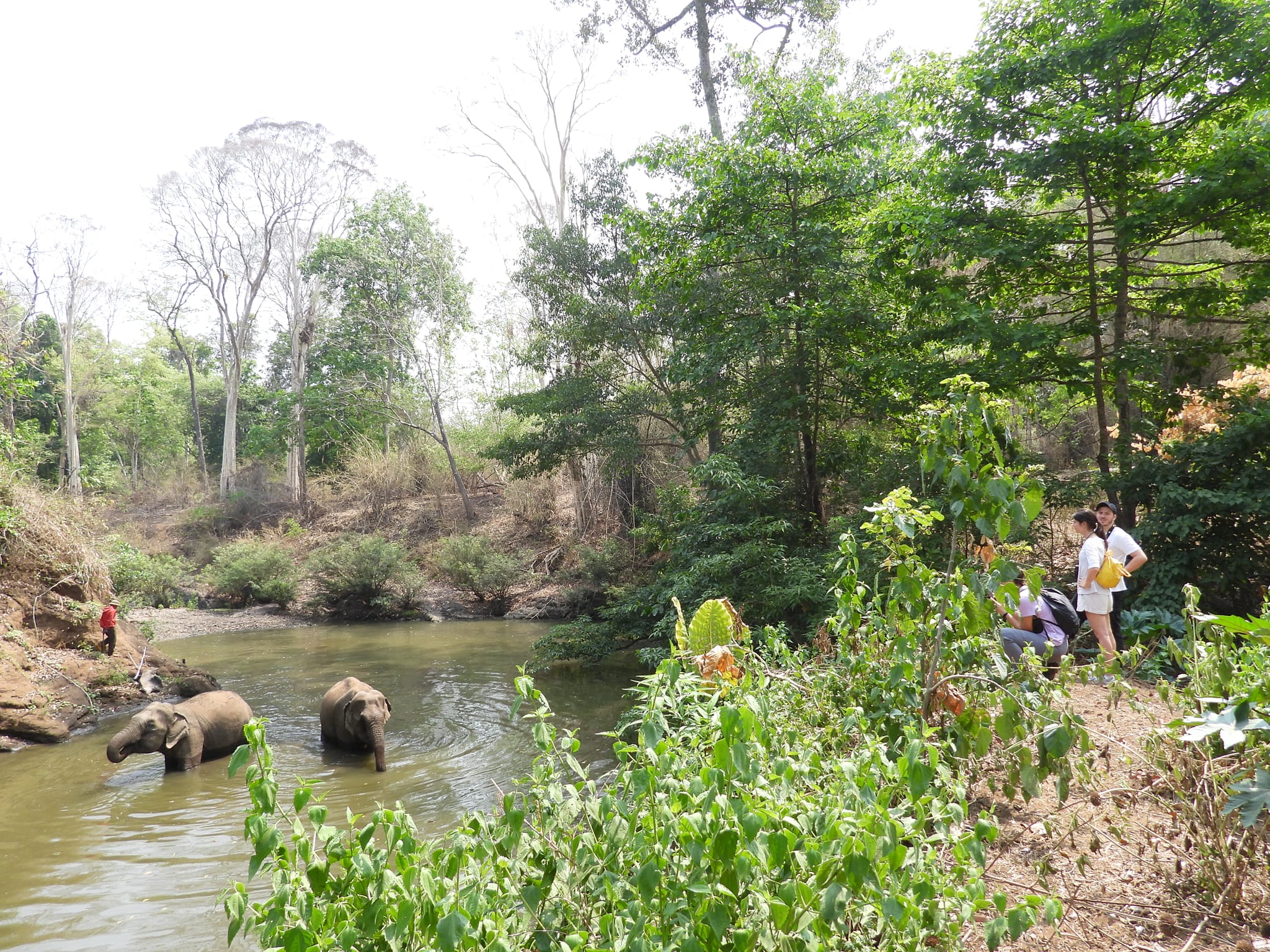
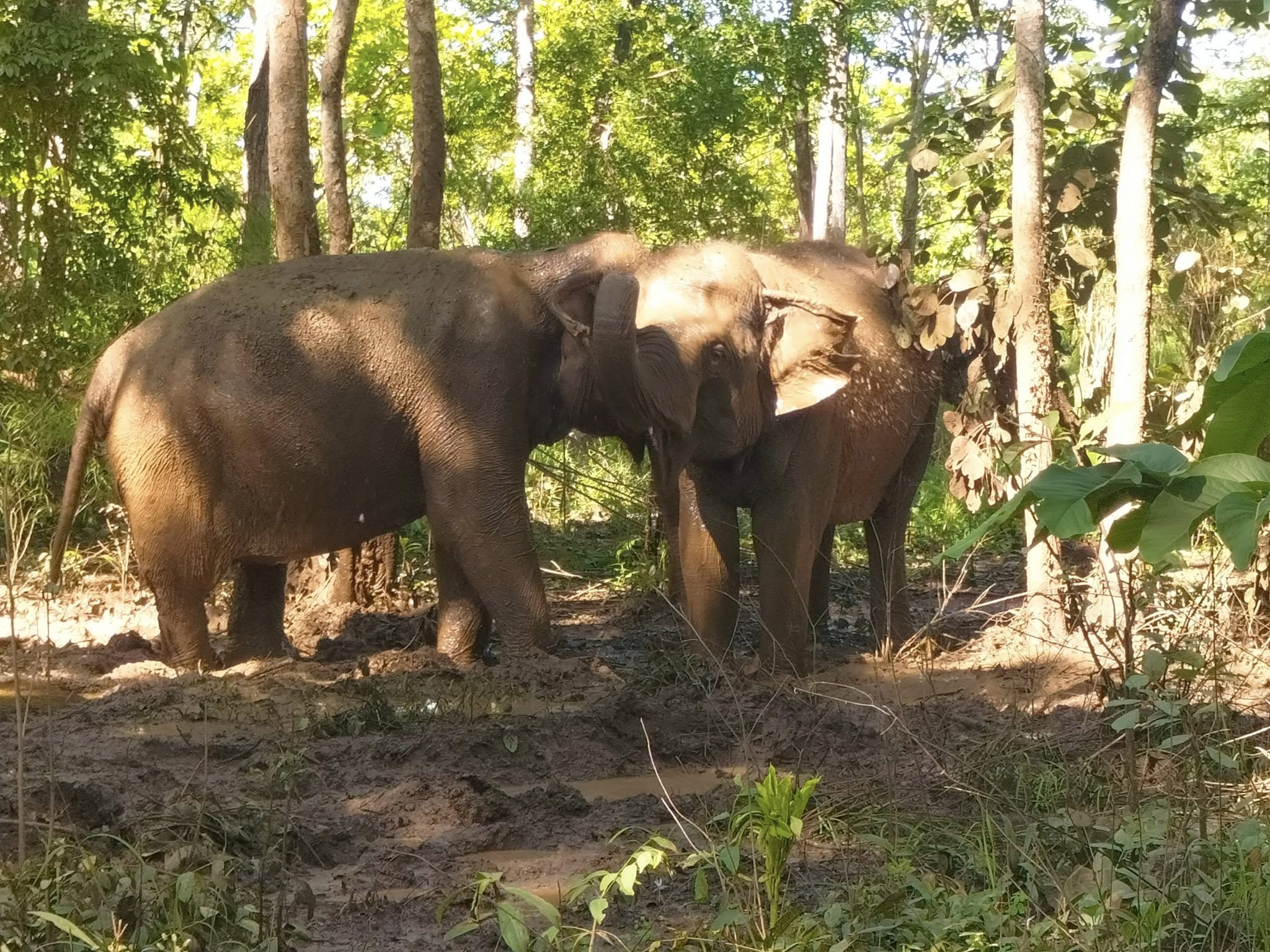
An adult female elephant, when truly free, rarely walks alone. In the forests of Yok Don, Bun Khăm's closest friend is Y'Khun — another female elephant in the program. The two of them spend most of the day together: foraging side by side, soaking in a quiet stretch of stream that only the mahouts know, lying in the shade of a bằng lăng (crape myrtle) tree at midday, searching for mineral salts in natural earth licks.
On the Ethical Elephant Experience tours at Yok Don, the moment most often captured by international visitors is not a portrait of "an elephant" — it is the sight of two female elephants standing shoulder to shoulder beneath a tree canopy, trunks intertwined as if mid-conversation. Ten years ago, no one in Vietnam's elephant tourism industry would have believed such a scene could be a sellable product. Today, that scene is the product.
"No Riding. No Bathing. No Touching." — Why This Is Progress
For decades, the domesticated elephants of Vietnam's Central Highlands served humans in the most literal sense of the word: hauling timber, carrying tourists, standing still while strangers climbed onto their backs to pose, wading into rivers for visitors to scrub them down with brushes. All of it was labour on human terms, not on the elephant's terms. The Ethical Elephant Model at Yok Don National Park reverses that completely. Its core principles are:
- 🌳 Elephants are free during the day within a designated forest zone — no chains, no saddle (the wooden seat strapped to the back), no metal hooks.
- 👤 Mahouts observe from a distance. Their only purpose is to prevent human–elephant conflict: keeping elephants out of farmland, away from wild bulls in musth, and within safe boundaries.
- 🚫 Guests do not ride, do not bathe, do not feed, and do not touch the elephants.
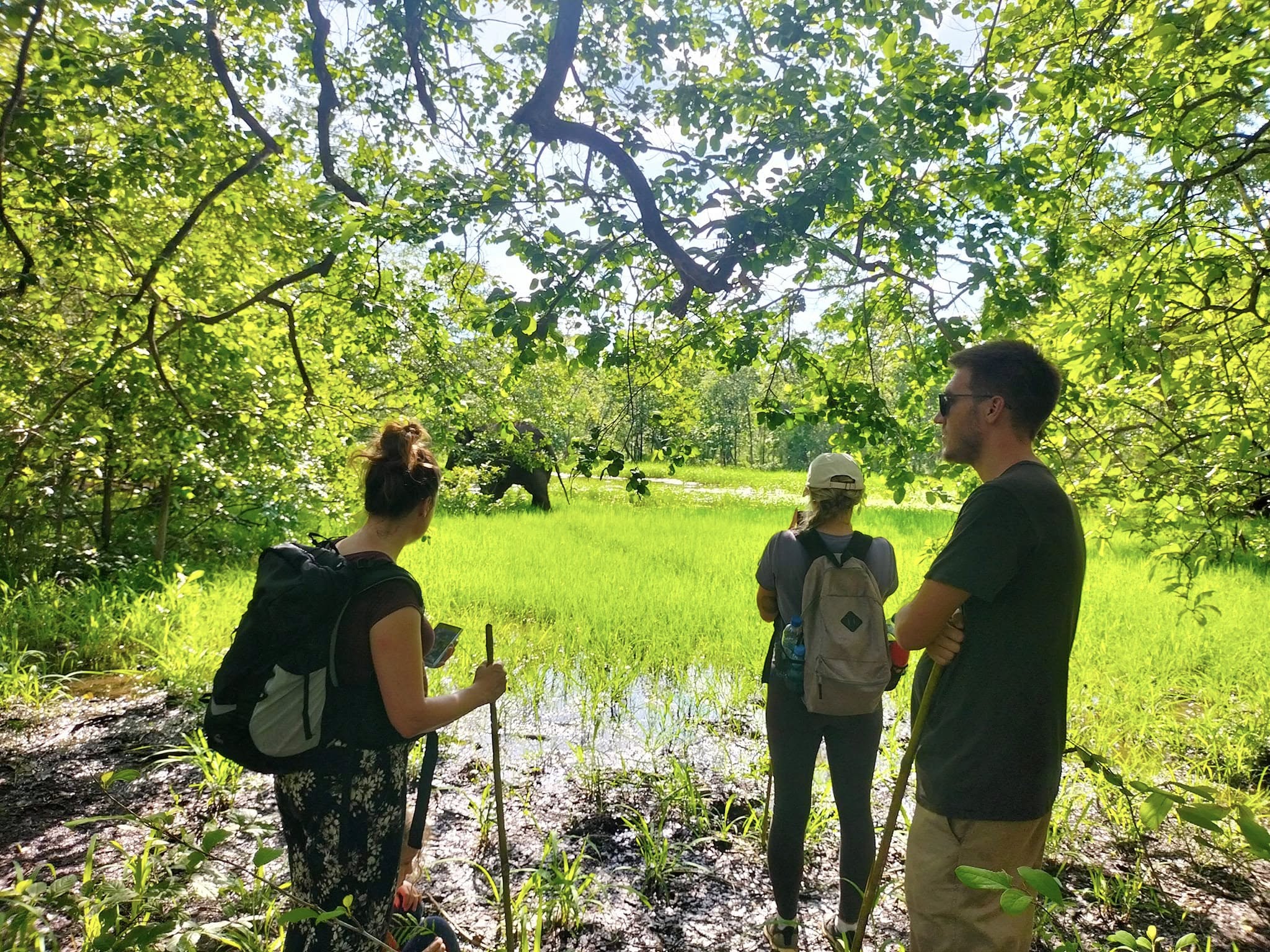
- 👀 Guests observe elephants from a safe distance — usually 20–30 meters — with the naked eye or binoculars.
- 📸 No flash photography, no loud noises, no calling out the elephant's name to "make her pose."
- 👥 Maximum group size: 4–6 guests, so the elephant never feels surrounded.
In other words: you are not the elephant's customer. You are a guest of the forest in which the elephant lives. The lighter your presence, the more successful the program.
"I used to lead elephants so tourists could ride them. Now I just walk behind my elephant and let her lead me. The two are very different jobs." — a sentiment shared by mahouts in the Ethical Model at Yok Don.
What You Get to See If You Don't Touch the Elephant
The moments you remember most when you leave Yok Don probably will not be a selfie with an elephant — because, quite simply, there will be no such selfie. The moments you remember will be slower, quieter, and longer-lasting:
- The sound of the wooden bell tied around Bun Khăm's neck, echoing from somewhere two hundred meters deep in the forest, drifting in and out with the wind.
- A fresh elephant footprint pressed into the red earth of the dipterocarp forest — as deep as a human palm, still wet with morning dew.
- Bun Khăm and Y'Khun standing together in a patch of light between the trees, trunks intertwined, paying you no attention whatsoever.
- The stories Mr. Y Mức Bya tells you — not to help you "connect spiritually" with an elephant, but to help you understand what an elephant actually needs in order to live like an elephant.
- A bamboo-tube rice lunch eaten in the shade after a morning of walking — Bun Khăm somewhere in the forest, completely out of sight for the next half hour, and that is normal. That is the success of the model.
Why the Ethical Elephant Model Needs You
A traditional elephant-riding tour can take in twenty or thirty guests in a single day. The revenue is high, the elephant is exhausted, but "the money comes in." An observation tour run to proper welfare standards takes no more than 4–6 guests, lasts all day, and lets the elephant rest in its own natural rhythm — but earns far less.
That economic gap has to be closed by three things:
- A higher tour price that reflects real value — the expertise of the mahout, the time invested, the rarity of the experience.
- A direct contribution to elephant welfare — Lonature commits 5–10% of profits to elephant care in Đắk Lắk, channeled through Yok Don National Park and local conservation partners.
- A conscious choice by the traveller: to come in small groups, not to ride, not to ask the elephant to "perform," and to accept the possibility of walking an entire morning without ever seeing the elephant.
You are not here to "enjoy" a tourism product. You are here to help protect a model that M'Nông mahouts like Mr. Y Mức Bya have chosen — accepting lower income and slower work, so that their elephants can live the final chapter of their lives with the dignity they deserve.
Practical Information Before You Go
The Ethical Elephant Experience at Yok Don comes in two versions: a one-day program (morning: tracking; midday: forest rest; afternoon: observing the elephant moving naturally through the dipterocarp forest) or a two-day, one-night program (with an added overnight in a tented camp or village stilt house, and a sunrise farewell as the elephant returns to the forest). Both options are capped at 6 guests per group and must be booked at least seven days in advance to allow the park and the mahouts to prepare.
- Best season: the dry season, from November to April — forest trails are easier to walk, and elephants experience less heat stress. During the wet season (May–October), the schedule may be postponed at short notice.
- What to bring: trekking shoes with good grip; long-sleeved clothing in thicker fabric (the dipterocarp forest is full of thorns, mosquitoes, and ants); a wide-brimmed hat; binoculars; your own water bottle.
- Strictly do not: bring strong-smelling sweet food; use flash photography; approach the elephant on your own; or call the elephant's name to make her "pose."
- Children: the recommended minimum age is 8 years old, and children must be accompanied by an adult at all times.
- Getting there: about 1 hour by car from central Buôn Ma Thuột to Yok Don. Phone signal in the elephant's range is virtually nonexistent — let your family or colleagues know you'll be offline for the day.
The price reflects the spirit of "fewer guests, deeper experience" — higher than the older elephant-riding tours, but it includes traditional meals, the mahout's professional fee, a contribution to the elephant welfare fund, and insurance.
A day with Bun Khăm is not a standard tourism product — it is a living slice of culture, operated by Yok Don National Park and the M'Nông mahout community. Lonature simply introduces and accompanies.
This is slow travel. You may walk for hours and only glimpse Bun Khăm briefly through the trees. That is not a failure of the tour — it is the point.
📩 To plan a slow, ethical itinerary in Đắk Lắk, write to <[email protected]> or message us on WhatsApp / Zalo: +84 919 366 000.